
 By Travis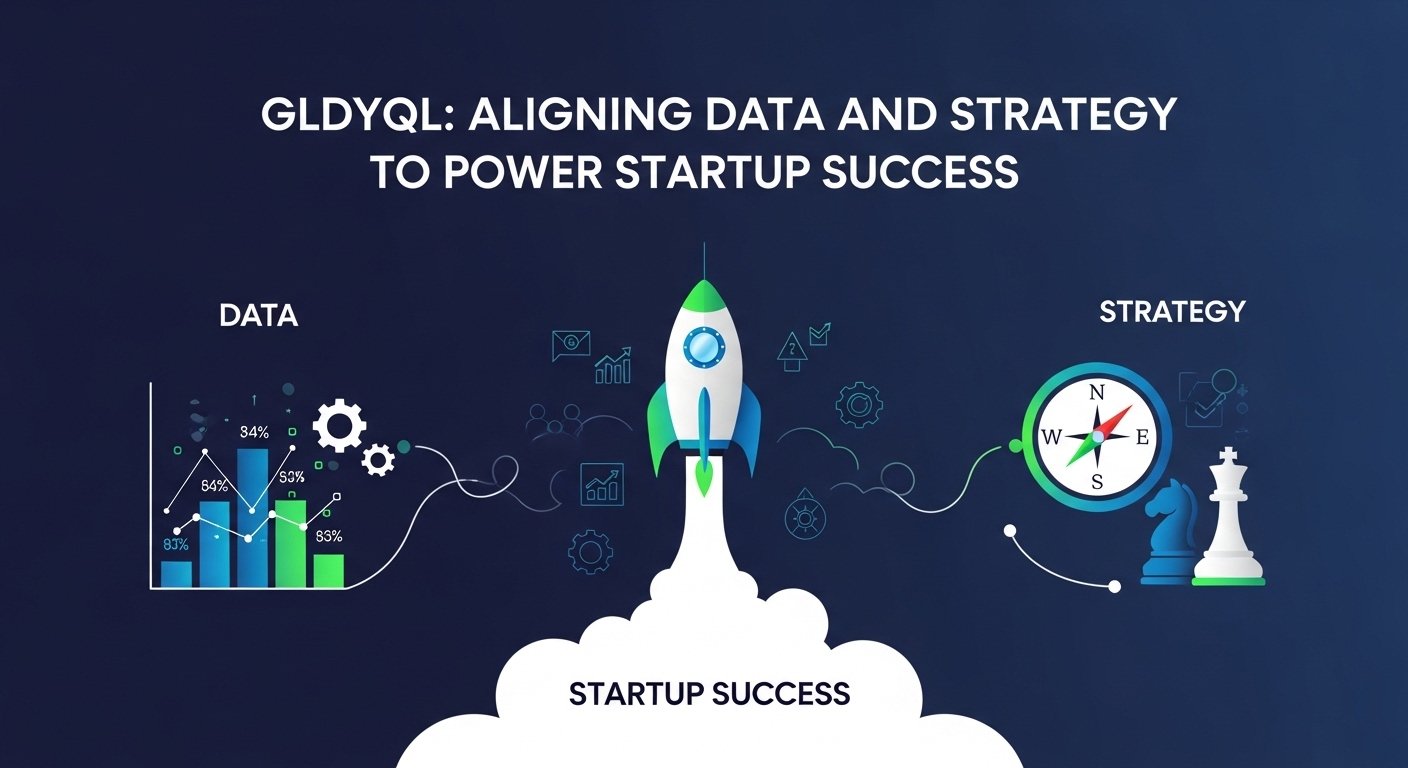
In today’s fast-moving digital economy, startups face immense pressure to innovate, scale quickly, and outperform competitors. While many founders focus on product development or marketing strategies, the most successful startups understand that sustainable growth requires something deeper—alignment between data, strategy, and execution. This is where GLDYQL enters the picture.
GLDYQL is emerging as a modern growth framework designed to help startups build smarter systems for scaling their businesses. By integrating real-time data insights with strategic decision-making and operational execution, GLDYQL provides a structured approach to achieving sustainable growth. Instead of relying on guesswork or disconnected strategies, startups using GLDYQL gain a clear roadmap for building, scaling, and competing effectively.
This article explores what GLDYQL is, how it works, and why it’s becoming an essential framework for startups aiming to thrive in competitive markets.
What Is GLDYQL?
GLDYQL is an intelligent growth framework that connects data analysis, strategic planning, and operational execution into a single integrated system. Its primary purpose is to help startups turn insights into action quickly and efficiently.
Traditional business strategies often treat data analytics, marketing, product development, and operations as separate departments. GLDYQL eliminates these silos by creating a unified structure where every decision is guided by real-time insights and measurable outcomes.
At its core, GLDYQL helps startups answer three crucial questions:
-
What do the data and market signals reveal?
-
What strategic actions should be taken?
-
How can teams execute those actions effectively and measure results?
By aligning these three elements, startups can move faster, adapt to changes, and scale with greater confidence.
Why Startups Need a Framework Like GLDYQL
Startups operate in environments that are highly uncertain and competitive. Unlike established companies, they often have limited resources, small teams, and constantly evolving business models. Without a structured growth framework, startups risk making decisions based on intuition rather than evidence.
GLDYQL addresses several common challenges startups face:
1. Fragmented Data
Many startups collect large amounts of data from marketing campaigns, product usage, and customer interactions. However, these insights are often scattered across tools and platforms.
GLDYQL centralizes these insights, allowing teams to view and interpret data within a unified strategic context.
2. Slow Decision-Making
In traditional organizations, decision-making often involves multiple layers of approval and disconnected departments.
GLDYQL encourages agile decision-making by linking data directly to strategy and execution.
3. Misaligned Teams
When departments operate independently, their goals may not align with the company’s overall growth strategy.
GLDYQL ensures that every team—from marketing to product development—works toward shared, measurable objectives.
The Core Principles of GLDYQL
Although the framework can be customized for different organizations, GLDYQL generally revolves around several key principles.
Data-Driven Insights
At the heart of GLDYQL lies a commitment to data-driven decision-making. Instead of relying on assumptions, startups analyze real metrics such as customer behavior, product engagement, and market trends.
This approach enables companies to identify opportunities, detect risks early, and make informed strategic decisions.
Strategic Alignment
Data alone does not create growth; it must be translated into actionable strategies. GLDYQL helps startups connect data insights to strategic goals, ensuring that every initiative contributes to measurable outcomes.
For example, customer feedback might reveal demand for a new product feature. Within the GLDYQL framework, that insight becomes part of a larger growth strategy supported by marketing, development, and customer success teams.
Execution Efficiency
Even the best strategies fail without proper execution. GLDYQL emphasizes operational efficiency, ensuring that teams have clear responsibilities, timelines, and performance indicators.
By streamlining workflows and aligning team efforts, startups can implement strategies faster and measure their impact more effectively.
Continuous Optimization
One of the most powerful aspects of GLDYQL is its focus on continuous improvement. As new data becomes available, startups can adjust their strategies and refine execution.
This cycle of analysis, action, and optimization allows companies to adapt quickly in rapidly changing markets.
How GLDYQL Works in Practice
Implementing GLDYQL typically involves a structured process that connects insights with strategic actions.
Step 1: Collect and Analyze Data
The first step involves gathering data from various sources, including:
-
Customer behavior analytics
-
Marketing performance metrics
-
Product usage statistics
-
Sales data
-
Market trends
This information provides a comprehensive view of how the business is performing and where growth opportunities exist.
Step 2: Identify Strategic Opportunities
Once data has been analyzed, leadership teams identify key opportunities for growth. These opportunities may involve improving customer acquisition, enhancing product features, or expanding into new markets.
GLDYQL helps prioritize initiatives based on their potential impact and feasibility.
Step 3: Align Teams Around Goals
After defining strategic objectives, teams across the organization align their activities with those goals.
For example:
-
Marketing teams may focus on targeted acquisition campaigns.
-
Product teams may prioritize feature development based on user insights.
-
Customer success teams may improve retention strategies.
This alignment ensures that every team contributes to the company’s growth strategy.
Step 4: Execute and Measure
Execution is tracked through clear performance indicators. Startups monitor progress using dashboards and metrics to determine whether strategies are delivering expected results.
Step 5: Optimize and Scale
The final stage involves refining strategies based on performance data. Successful initiatives are scaled, while underperforming tactics are adjusted or replaced.
This iterative process allows startups to grow efficiently while minimizing wasted resources.
Benefits of the GLDYQL Framework
Startups that adopt GLDYQL often experience several advantages.
Faster Growth
By aligning data, strategy, and execution, companies can identify opportunities and act on them quickly. This speed is essential in competitive markets where timing often determines success.
Better Resource Allocation
Startups frequently operate with limited budgets and small teams. GLDYQL helps prioritize initiatives with the highest impact, ensuring resources are used effectively.
Improved Collaboration
When teams share the same goals and insights, collaboration improves significantly. GLDYQL encourages transparency and communication across departments.
Greater Adaptability
Markets evolve rapidly, and startups must adapt to survive. Because GLDYQL relies on continuous data analysis, companies can respond quickly to new trends and challenges.
GLDYQL and the Future of Startup Growth
As technology continues to evolve, data is becoming one of the most valuable assets for businesses. Startups that successfully harness data can identify opportunities faster and deliver better customer experiences.
GLDYQL represents a shift toward intelligent growth systems where insights, strategy, and execution operate as a unified engine.
In the future, frameworks like GLDYQL may integrate advanced technologies such as:
-
Artificial intelligence
-
Predictive analytics
-
Automation tools
-
Real-time performance monitoring
These innovations will further enhance the ability of startups to scale efficiently and compete on a global stage.
Implementing GLDYQL in Your Startup
For founders interested in adopting the GLDYQL approach, the process begins with building a culture that values data-driven decision-making and cross-team collaboration.
Key steps include:
-
Establishing clear metrics for growth and performance
-
Integrating analytics tools across departments
-
Creating shared dashboards for transparency
-
Encouraging experimentation and iterative improvement
-
Aligning teams around unified strategic objectives
By gradually implementing these practices, startups can build a growth engine powered by insight, agility, and execution.